Showing posts with label ct scans. Show all posts

Tuesday, March 08, 2011

While we're waiting, an exegisis

The CT scans today went fine.  I had to swallow a quart of clear solution which supposedly helped bring everything into better focus, in addition to the solution they pumped through my port right before the scans started.  You can feel the solution that is injected into the port.  It feels like a concentrated hot wave and also makes you feel like you are peeing in your pants. Most unsettling. This time I could feel the warmth spread all the way to my fingertips, so hopefully the images were clear and distinct.

Tonight, returned home late after a dinner and a meeting of the session at church.  I know, it's amazing that this deeply raised-in-Catholicism girl has been a member of the Presbyterian church since 1991 and an ordained elder since 1993.  But I have to say that as an attorney, I find the system of governance to be quite understandable (lawyers were the backbone of the founding of the Presbyterian church) and as a person, I have come to value the friendships that I have made there.  It is all about fellowship. 

Which is why I hate to see the first cracks in a new schism within the American Presbyterian church.  The last time the Presbyterian church split in two, it was over slavery, in 1861.  Now it appears that the church may be splitting over the ordination of gays.  Keep in mind that not only ministers are ordained in the Presbyterian church, so are lay leaders, e.g. elders and deacons.  So under the present Presbyterian Book of Order, gays cannot be ordained.  There has been agitation in the past twenty years to change this.  I became a member of the Presbyterian church in 1991 when it appeared that the church was relaxing its prohibition.  That was a false hope.  I have stayed with the church for the past 20 years, because 1) I found a home and 2) I believe that one can effect change better by working from within.

However, it appears that there may be a second historic split of the Presbyterian church in the future.  Earlier this year a letter was sent out to Presbyterians, by those fearful of opening ordination to sexual minorities.  This letter can be found here.  They have called for a meeting in late August in Minneapolis, presumably to discuss peeling off from the denomination.  Two pastors in the largest Presbyterian church in Seattle signed the letter, but the members of the congregation that I have spoke with, are unaware that their pastors are doing this.  That's interesting.

A Presbyterian minister, Rev. Margaret Aymer Oget, among others,  has published a response to this letter.  I was moved by her statements in a way that I have not been moved in a long time.  Her conclusion is worth reprinting in full:

HOW WE GOT TO THIS PLACE -- AN RSVP


The brethren who wrote this letter to the church have, on February 7th, asked that we read their letter rather than to consider the signatories. This I have tried to do. Some will claim I have done so unfairly. This is entirely possible; I have never claimed to other than a subjective knowledge, baptized but still quite human.


Still there is one phrase from the letter with which I must take direct issue: “How we got to this place is less important than how we move forward.” (para 3.) Please consider my response to this phrase my RSVP to the churchwide invitation. For indeed, my brothers, how we got to this place may well be the crux of the matter.


We got to this place, as a denomination, by praying to the Triune God and thinking as two or three gathered together about the authority of scripture, Christology, and the extent of salvation.


We got to this place, as a denomination, by ordaining groups that, until fairly recent history, were considered ineligible for ordained ministry: groups of color, women, the divorced, and members of the church under the age of 21.
We got to this place, as a denomination by suffering the creation of fellowships (like the Layman) in opposition to the Confession of 1967 and silently enduring the refusal of churches to live into their financial obligations to the whole denomination.

We got to this place because, in 1978, we declared that seminaries of the Presbyterian Church (USA), should be safe places of non-discrimination for all people.
We got to this place by acting on our belief that the sacraments of baptism and the Lord's supper are not ours to control but are the property of the God whose grace abounds beyond our human understanding.


We got to this place by following the Christ who was belittled by the religious leaders of his day for his breaking of biblical commands (notably the fourth commandment and laws regarding eating abomination); and by following the Spirit that did not even require of Cornelius the mark of the covenant (circumcision) before it fell on him, bringing him into the church.


Most recently, we got to this place by affirming as a General Assembly the anti-racist, Reformed confession written in Belhar, South Africa that affirmed: God has entrusted the church with reconciliation, therefore, “any teaching which attempts to legitimate such forced separation by appeal to the gospel, and is not prepared to venture on the road of obedience and reconciliation, but rather, out of prejudice, fear, selfishness and unbelief, denies in advance the reconciling power of the gospel, must be considered ideology and false doctrine.”


This year marks the sesquicentennial of the beginning of the US Civil War, a war which caused the great schism in the Presbyterian Church.
My brothers, I fear, sadly, that issues of property and like-mindedness, difference in biblical interpretation and authority and an unwillingness to be part of a larger body that fundamentally challenged their adherence to slaveocracy were exactly the reasons that the fellowships of congregations in the south created new seminaries, new synods and ultimately a new denomination.


Indeed, my brothers, my exegesis suggests that “how we got to this place,” and thus where we go from here, is precisely the point at issue.


My brothers, you invite the church into an adventure that is not at all new, but historically very familiar. It is an adventure marked by the European cultural norms of individual self-government, the right of property, a modernist take on liberty, a neo-colonialist model of mission, and a pre-modern understanding of biblical texts. This adventure has as its intent to grow the church in and for the twenty-first century, with neither consideration nor validation of how we got to this place.

I admit I am not thus tempted, and must respectfully decline.


Instead, with God's help, I will remain in the Presbyterian Church, USA, and with my denomination I will follow the Christ whose followers dwindled from 5000 to zero over the course of three years, yet who calls us still to follow; who has been demonstrated a capable healer of the deathly ill and has revealed himself to be the resurrection and the life.

With God's help, I will remain in this denomination, following the Spirit who fell on eunuch and centurion, and immigrant peoples in and from every language group of the Roman-conquered world, regardless of biblical adherence to seminal commands such as sabbath, kashrut and circumcision.
With God's help, I will remain in this denomination and follow the God who promises that, at the time of the coming kingdom, lion and lamb will lie down together, who calls for justice to roll down like waters, and yet desires mercy and not a sacrifice.
With God's help, I will remain in this denomination, living out my call with energy, intelligence, imagination and love, as I seek to do ministry with and among the contentious, shrinking, justice-seeking, mercy-doing, humbly-walking, peacemaking sisters and brothers of the Presbyterian Church (USA), who although we are dying yet, see, we live.

Even with God's help, I will be imperfect in my discipleship. Yet will I follow, relying on Jesus, my high priest, to make intercession for me; asking the Spirit of God to give me speech; and confessing with this denomination, and with the church in every age–in life, in death and in life after death, we belong to God.


Soli Deo Gloria,


Rev. Margaret Aymer Oget, Ph. D.
Minister of Word and Sacrament


Rev. Oget's response makes me proud to be a Presbyterian at this time.

Friday, July 16, 2010

Tentative ct scan results positive

This is all I know at the moment--it's a note from my Group Health oncologist:


Dear MS Cullen,


The CT scan that you had done shows improvement in the neck but with stable disease in the chest.


Sincerely,

G R

Wednesday, July 14, 2010

CT scan moved up to tomorrow

I had my first chemotherapy at Seattle Cancer Care Tuesday.  It went well, but took a long time.  These days, I have to start out with blood tests to make sure I am in shape for the chemo.  Then I met with one of the lung cancer oncologists, Dr. E, who told me the tests were good, so I could get the chemo.  He also asked if I could get Group Health to move up my ct scans because they would like to see how this third line treatment is coming along.  And as the last ct scan was in April, it seems reasonable to get another picture of what's going on.   Then on to the chemo and I was out by noon.  But starting at 7:15 meant a long morning.  I slept most of the afternoon but managed to wake up in time to call Group Health and reset the cat scans to tomorrow at 3pm.  So fingers crossed.

Wednesday, April 28, 2010

Not such good news

I wish it were better.  But the lung tumors are increasing in size.   The nodes in my neck are decreasing some.  But that doesn't put me at where I was in December because the tumor in the mediastinum is 1/4 inch larger, which is significant.  I should get the ct scan reads shortly and I will have more detail to provide but right now I'm in a bit of a shock.

The new Dr. that I met with today recommended continuing on the Tarceva for two more months to give it a bit more time to see if it is truly played out for me. And given the major rashes on my legs, my back and my face, I would say the Tarceva is doing bloody well in other respects. If there's no change or the tumors have continued growing by the end of June, we abandon the Tarcevaand move on to radiation.

Even radiation would not be considered curative. There is no hope for that at this point. All we can hope for is to keep the cancer in check a while longer. My friend, Diane, who showed up with me, asked the Dr. towards the end of the meeting if there was anything I could do in terms of change of diet, more exercise and his response was, "Just have fun. That sort of tells me where I am right now.

Tuesday, April 27, 2010

CT scan anxieties

My 4th ct scan ever is scheduled for tomorrow.  It has been set for a month now.

The tension is just starting to hit tonight as I reflect on the possible outcomes.   I already have detected a swollen lymph node in the subclavicular region of my neck on the left side.  Therefore, I know it is not going to be a cake walk.  There will be some negative news forthcoming, but I can't  tolerate contemplating that the Tarceva is not working at all, particularly as my left leg looks like I walked through a fire ants' nest with shorts on.  It's great for grossing out your mom when you are back visiting her in Lexington, KY, but not for those wee hours of the morning when you can't get to sleep because it is itching or throbbing.

And I learned that  the ex spousal unit is remarrying.  The happy day is set for August 8, at a lovely outdoor location in Seattle.  It sets the stage for him to run for governor in 2012, if all the entrails are positively read and all the other omens fall in line. Of course, he didn't tell me.  Just as he's never called to express concern as I deal with cancer.  One of those things.  We are both far different people than we were when we married 30 years ago, and when we divorced 11 years ago.  However, our children are wonderful gifts regardless, and I am remain grateful for their existence and presence in my life.

So that's the short skinny of my anxieties.

On the plus side, our DeFeet Lung Cancer team remains the 3d highest fund raiser for the Lung Association of Washington.  Go team!  And thank you so much to everyone who contributed.  This will be fun on Sunday.  Even if it does rain.  More on that later.  And more to post tomorrow on the ct scans, good news or bad.

Thursday, April 08, 2010

The consolidated read of my ct scans

I promised in my prior post to add in the radiologist's answers to the questions I posed concerning my 3 sets of ct scans that have been done of my neck and chest. Rather than add them to that post, I offer it here separately because the doctor mixed her responses in with my original email. The doctor's comments are italicized to dstinguish them from email as the paragraphs were somewhat rearranged from my original.


Mrs Cullen,
I have answered some of the questions that you have directed to Dr. N*****. I hope the answers help you somewhat.

I want to impress to you that the reports that we generate are to be read by physicians. The terms of anatomical descriptions and jargon that we use are standard with some variations. All the reports I reviewed are using variations that are within the accepted norm. Often, we edit or omit to report findings that may not be significant when we report. For example, a patient has 20 lung nodules we (at least I) may not describe them all because there is no difference between having 10 lung nodules versus 20.

M****** O*, MD
Central radiology


Additional questions:

1. Why are there 6 identified node sites with cancer in the 12/09/09 lung ct scan and only 5 in the other two lung ct scans?

Sometimes we miss reporting a node/nodule/mass. The nodule that you refer to was there but was not reported on the initial study. Unfortunately, on these lung nodules, it is quite difficult. We do our best but sometimes, they get missed. For lungs, we review apporoximately 90 to 100 images. Due to technical factors, small nodules can be easily overlooked because they look very much like normal vessels in the lungs. We look at images back and forth multiple times but we do miss them from time to time.
Even if we find them, there is another issue of whether these are cancer or not. No one knows for certain. We make inferences based on the total number, appearance, interval growth. This is why follow up scans are so important.

Perhaps, Dr N***** can point out the nodules versus adjacent vessels to you when you visit next.


2. Do you think that having different radiologists read the exams can create inconsistencies?

There is always inter-observer variability. However, we try to use similar language to describe what we see. Ultimately, it is the images themselves that give the final answer. We have to line up the CT images at the exact same location on the computer and measure the abnormality. Even if the wording may be selected differently, the important fact is if the nodules are getting either smaller or larger. This information is not confusing to the referring physicians. If there is a concern from the referring physicians point of view, we coordinate with that physician so that there is no misunderstanding.

Would it be too much to ask that one very good radiologist sit down with all three of my ct scans, and read them, to give a more uniform interpretation of the development/shrinkage of my tumors?

I think the information has been conveyed to the referring oncologist, Dr N*****, without confusion regarding what is happening in your case. Your masses/nodules are all shrinking. If the referring oncologists are confused regarding our reports, and wishes to have one radiologist read all of the studies, then we can pursue that. However, if the radiologist that reads your study is on vacation for 2 weeks, for example, then the study will not be read for that duration. There are other logistical issues regarding such specified arrangements. For example, I only work 3 days or so every week (as do many other radiologists who work part time), and the CT would sit waiting until I returned to work 4 to 5 days later. Again, if you wish so, we can arrange for it.

3. What is going on with the neck scans? I really don’t know what the reading on the last one means.

Very evident left vocal cord paralysis today. Stable
adenopathy in the low left neck.

This is impression from your most recent neck CT. The impression from the reading radiologist is that the adenopathy is stable. Form that statement, I make an inference that there are no new findings. I do not understand your question.


B. Lung (reader: M****** O*, MD)


1. Paraspinous location of left lower lobe, 22 x 16 mm previously 30 x 22 mm at same location (there’s no nodule that matches this measurement in the 12/09/09 lung ct scan—which one is she talking about?)

As radiologists, we do not use other people’s reports as much as the images that are in front of us. The images “save” the measurements that the last radiologists have used. Unfortunately, the measurements from the study from 9/16/09 were not saved with the study, a computer glitch. Therefore, I had no record of what image was measured. Therefore, I needed to re-measure the nodules (mass is another word that we use to describe nodule). I could not get 2.6x2.1cm (which is what Dr Burns did). I reported what I measured and compared to what I got on the 2/19/10 study. What is important is that the size is decreasing, measured at the exact same location. I suppose that I probably did not have to give the re-measurement from Sept, which would not have lead to confusion. However, I wanted to emphasize that the mass is decreasing considerably so I gave the measurement that I made.

2. Right lower lobe posterior nodule, 4mm, down from 5mm (which one is she referring to here?)

This was reported in 12/9/09 but not in Sept 2009.

3. Left upper lobe anterior lesion appears slightly smaller and less plump as well (is this the apical nodule, B.4 from the 12/09/09 lung ct scan? If not, which is it?)

Apical = left upper lobe. Apical actually refers to very highest point of left upper lobe. Even in the same day and on the same scan, we may call it apical or left upper lobe, when describing the location. This is never confusing to the referring clinicians.

4. Subplueral posterior left lower lobe superior segment, 9mm-- previously 15 mm (which one is this?)

Yes. Again, these are descriptions that we use that we understand to be the same.

5. Adenopathy in the AP window decreased, 32 x 14 mm (is this B.1 in the 12/09/09 lung ct scan? If not, which is it?)

yes
AP window = aortopulmonary window = aortopulmonic window.


A. Neck (reader: A*** N**, MD)
1. right thyroid lobe, 5mm nodule –is this cancer?
2. left thyroid lobe, 2mm—is this cancer?

Thyroid nodules are very prevalent in normal population, as much as 70 to 80% of people. Only a tiny proportion of nodules are cancer. Unless there is a reason to pursue these nodules, we do not pursue them for the presence of cancer. There are criteria that determine if they need to be pursued. Since they are there, they were reported.

3. Pretracheal node, 13mm—is this cancer?

We use a size criteria to describe if something is abnormally enlarged or not. We have no idea of knowing if something is cancerous or not unless it is biopsied. We can give an educated guess regarding any node based on size, interval growth, and morphology. A 13mm node is abnormally enlarged node in this location. The abnormality is based on the statistical analysis of all nodes that are seen in the chest and the biopy correlations that were done as a clinical study performed many years ago. (We use the knowledge base that is generated over many years of clinical data accumulation.) It is up to the oncologist, surgeon, and the patient combined with the imaging information to decide if this is something that needs definitive answer or not, which will require biopsy. In your particular case, we know that you have metastastic lung cancer. Whether this particular node has cancer or not does not change your cancer staging. The staging information is what is used to direct therapy, not whether or not each nodule is cancerous. Dr N***** can probably explain this to you better.


4.Heterogenous mass seen in aortopulmonic window, 24 mm (what’s the difference between this and the aorticopulmonary window?)

They are both routinely accepted ways of describing the same thing.

Tuesday, April 06, 2010

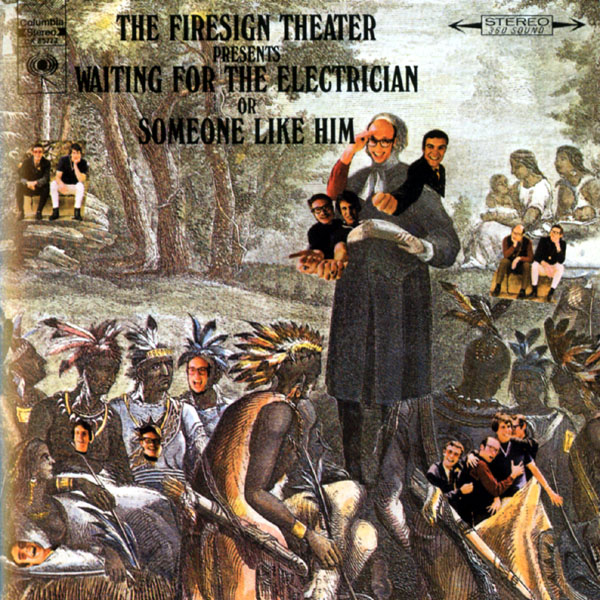
Waiting for the Electrician or Someone Like Him


I'm betraying my hippie roots tonight, but there is a point, although it will probably take too long to get to it for most of you who didn't stay up way too late to listen to these guys in your misspent youth.

Ah well. On to the past...

I had an ultrasound of my upper right chest and shoulder and right arm Monday afternoon. No blood clots were found, for which I am grateful. I have changed my sleeping arrangements, which is relatively easy to do when your bed companions are two miniature dachshunds, so that now I am perched on the side of the bed (those dachshunds may be small but they like to crowd right up next to you) where it's easiest to sleep on my left side. This seems to have alleviated the pain symptoms on my upper right side from last week. I am hopeful that this is auspicious news for my port.

I went to Group Health this afternoon to pick up my new glasses. My current pair is 4 years old and while fairly serviceable, the lenses are scratched and in need of polishing. Or so I thought. When I picked up my new glasses, I mentioned to the optician that I wanted to leave my old glasses so the lenses could be polished. "You could do that," he responded, "but we use a very caustic agent to strip the lenses and they could end up all white." And why would that be? I inquired. He explained that the anti reflective coating on my glasses was responsible for my inability to clean the scuffing off the lenses by myself, and that's why it would have to be done in a chemical vat--to remove the coating. With not a very good chance that the lenses would actually be clean in the end. Ah. Right. That would be the same reflective coating that I agreed to apply to my new lenses when I purchased them last week for an additional $70 and nothing was disclosed to me at that time about this, right? Right. Figures.

This evening I went to a panel discussion at the University of Washington in Kane Hall. The topic was: New Discoveries in Medicine: Implications for the Cost and Quality of American Healthcare Panel Discussion. On the panel were 4 eminent physicians: a doctor from Group Health, one from Harvard Medical School, a doctor from Amgen and the dean of the UW medical school. The discussion was very interesting, even if they did not answer the two questions I wrote down and submitted to the group. But one of the topics that was touched on as sort of a pathway for the future was standardization of protocols. It was mentioned in connection with treatment of low back pain, which is of interest to me professionally as I do worker's compensation cases for a living and low back pain is a major cause of the cases that are heard by the Board of Industrial Insurance Appeals. Standardizing care for low back pain would definitely make my work, and the work of the Board easier. However, I'll believe it when I see it.

My scepticism is further reinforced by my own experience with respect to the multiple doctors who have read ct scans that I have had since I was diagnosed with lung cancer. I have had ct scans on Sept. 16, 2009, December 9, 2009, and February 19, 2010. Each time scans were taken of the neck and of the chest. Each time one doctor read the neck scan and one doctor the chest scan. Of the six scans, there were five different doctors doing the reads. Is it any wonder that if you took all six of those scans and read them together you might be a bit confused? Just so you can get a better idea of the confusion, I am posting the letter I sent to my oncologist on February 20, 2010, outlining my problems in understanding:


Dear Dr. N***,

Tonight I reviewed all of the ct scans done on my neck and lungs--that would be 3 for each--and I have a number of questions based upon them. To begin with, I summarized each of the ct scans and then after each nodule, the radiologist identified as cancerous, I put my question in parenthesis. There are additional questions at the end as well. I hope we can discuss these at some length next week.

September 16, 2009, CT scan:

A. Neck (reader: Dr A**** N**, MD)
1. right thyroid lobe, 5mm nodule (is this cancer?)
2. left thyroid lobe, 2mm (is this cancer?)
3. Pretracheal node, 13mm (is this cancer?)
4.Heterogenous mass seen in aortopulmonic window, 24 mm (what’s the difference between this and the aorticopulmonary window?)

B. Lung (reader: J*** B***, DO)
1. Left lower lobe lung mass, 2.6 x 2.1 cm
2. Smaller left lower lobe posterior subpulmonary nodule,1.3 x 1.0 cm
3. Left upper lobe pulmonary nodule, 4mm
4. Aorticopulmonary window, 2.3 x 1.4 cm
5. Precarinal lymph node, 1.2 x .8cm

December 9, 2009, CT scan:
A. Neck (reader: A**** N**, MD)
1. Interval enlargement of a lymph node; currently 11mm, as compared to 7 mm previously (where? I don’t find this on the 9/16/09 neck ct scan)
2. Anterior supraclavicular region node, 13mm—previously measured at 11.3mm (again, where is this found on the 9/16/09 ct scan?)

B. Lung (reader: J******** K****, MD)
1. AP window, centrally necrotic mass, 1.8 cm unchanged (really? It shows as 2.3 x 1.4 according to the ct scan above)
2. Dominant mass inferior medial left lower lobe decreased in size to 2.3 x 1.8 x 1.7 cm—previously 2.8 x 2.2 x 2.2 cm (Is this no. 1 in the 9/16/09 lung ct scan above? Numbers don’t match)
3. More cranial left lower lobe mass unchanged, 1.1 cm (which one is this? I don’t see it above)
4. Left apical noncalcified nodule unchanged, 4 mm (is this no. 3 from the 9/16/09 ct scan above?)
5. Noncalcified nodule in left lung base unchanged, 5 x 2mm (where is this on the 9/16/09 ct scan?)
6. Densely calcified granuloma in right lower lobe, 4mm (is in the right lobe of the lung as opposed to the left lobe and is this cancer?)


February 19, 2010 CT scan:


A. Neck (reader: C********* K*******, MD)
1. 3 nodes in a vertical row anterior to scalene musculature, overall size unchanged compared to 12/09/09 ct scan (12/09/09 scan describes only 2 nodes—so what gives here? And is this a problem that they are not shrinking?)

B. Lung (reader: M******** O*, MD)
1. Paraspinous location of left lower lobe, 22 x 16 mm previously 30 x 22 mm at same location (there’s no nodule that matches this measurement in the 12/09/09 lung ct scan—which one is she talking about?)
2. Right lower lobe posterior nodule, 4mm, down from 5mm (which one is she referring to here?)
3. Left upper lobe anterior lesion appears slightly smaller and less plump as well (is this the apical nodule, B.4 from the 12/09/09 lung ct scan? If not, which is it?)
4. Subplueral posterior left lower lobe superior segment, 9mm-- previously 15 mm (which one is this?)
5. Adenopathy in the AP window decreased, 32 x 14 mm (is this B.1 in the 12/09/09 lung ct scan? If not, which is it?)


Additional questions:

1. Why are there 6 identified node sites with cancer in the 12/09/09 lung ct scan and only 5 in the other two lung ct scans?

2. Do you think that having different radiologists read the exams can create inconsistencies? Would it be too much to ask that one very good radiologist sit down with all three of my ct scans, and read them, to give a more uniform interpretation of the development/shrinkage of my tumors?

3. What is going on with the neck scans? I really don’t know what the reading on the last one means.


I sent this to my oncologist and he had one of the radiologists read the scans and although I would love to post the consolidated report, the Group Health site is down tonight, so that will have to wait for tomorrow. However, to tie this back into the panel discussion on standardization from tonight, it was suggested that rather than just one doctor doing the reading for these six ct scans, it would be far better to put all five of the radiologists together and they could jointly come up with the correct reading. Rather like what a jury does with a civil or criminal trial. I like it. Sounds good to me. Except for the price tag. Which is always the 800 lb purple cow in the middle of the room.

So I guess I will continue to wait for the electrician. Or someone like him.